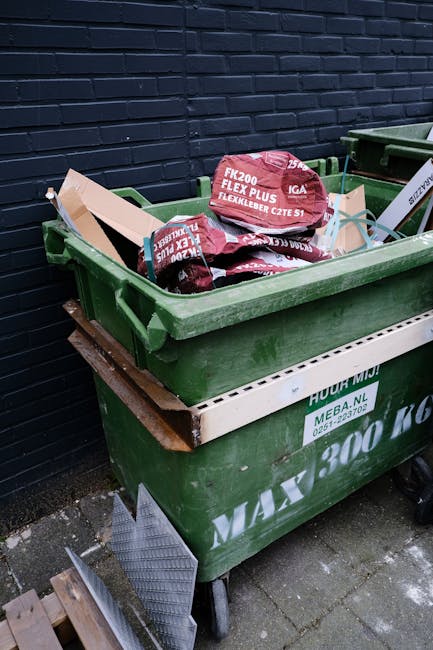
Skips and permissions on Tottenham High Road -- Haringey rules
Running a skip on a busy London road sounds simple enough until you hit the real-world bits: parking space, permits, pavement concerns, neighbours, and the council's rules. If you are dealing with Skips and permissions on Tottenham High Road -- Haringey rules, the main thing to understand is this: a skip can save time, but only if it is placed legally and managed properly. Miss a permission step, and suddenly a straightforward clear-out turns into delays, fines, or a very awkward phone call.
This guide breaks the topic down in plain English. We will look at when a skip needs permission, what the practical alternatives are on a street like Tottenham High Road, how Haringey-style rules are usually handled, and what to do if you want the job done cleanly without drama. To be fair, that is what most people want in the end: less hassle, fewer surprises, and a clear plan that actually works on the ground.
For readers comparing wider clearance options, you may also find it useful to look at waste removal and builders waste clearance, especially if the job is not huge enough to justify a skip.
Table of Contents
- Why Skips and permissions on Tottenham High Road -- Haringey rules Matters
- How Skips and permissions on Tottenham High Road -- Haringey rules Works
- Key Benefits and Practical Advantages
- Who This Is For and When It Makes Sense
- Step-by-Step Guidance
- Expert Tips for Better Results
- Common Mistakes to Avoid
- Tools, Resources and Recommendations
- Law, Compliance, Standards, or Best Practice
- Options, Methods, or Comparison Table
- Case Study or Real-World Example
- Practical Checklist
- Conclusion
- Frequently Asked Questions
Why Skips and permissions on Tottenham High Road -- Haringey rules Matters
Tottenham High Road is not a quiet suburban cul-de-sac. It is a live, active stretch of North London where traffic, delivery vehicles, buses, shopfronts, pedestrians, and day-to-day business all compete for space. That matters because skip placement is not just a logistics question; it is a public safety and access question too.
If a skip is going to sit on a public highway, even for a short period, permission is usually part of the conversation. On a road with tighter kerb space and constant movement, the risk of blocking visibility, narrowing access, or creating a hazard goes up quickly. In practice, that means the difference between a neat job and a job that gets stuck halfway through.
There is also a neighbour factor. People do notice when a skip appears outside a property. They notice the noise when it is loaded, the mess if rubble spills, and the frustration if a skip overhangs a footway. You do not need a perfect operation, but you do need one that feels considerate. That alone prevents a lot of complaints.
For business premises, shops, flats, and mixed-use buildings, the stakes are even higher. A skip can interfere with entrances, delivery bays, or customer flow. In those cases, it may make more sense to combine a permit-safe placement with a more flexible service such as business waste removal or targeted office clearance.
Practical takeaway: on Tottenham High Road, the best skip plan is usually the one that protects access first and convenience second. If the road space is awkward, rethink the method before you book the bin.
How Skips and permissions on Tottenham High Road -- Haringey rules Works
At a simple level, the process is about location. If the skip sits fully on private land, such as a driveway, yard, or enclosed forecourt, permission from the council is often not needed. If the skip goes on a public road or footway, permission is generally required. That is the basic pattern.
But the practical reality is a little messier. Tottenham High Road has different building types, frontage widths, loading restrictions, and parking pressures. A skip may technically fit, but still create a problem if it blocks sight lines or reduces safe pedestrian space. So the real question is not only can it fit? but also should it be there at all?
Here is how it usually works in plain English:
- You assess the site and decide whether the skip can go on private land.
- If it must go on the public highway, you arrange permission in advance.
- You check access, timing, and likely loading volumes.
- You choose the right size so it does not sit half-empty or overflow.
- You plan the collection date so the skip is not lingering longer than needed.
That sounds simple because, broadly, it is. The complications come from traffic, limited space, and the fact that even a small mistake can cause a lot of inconvenience. A skip placed outside the wrong gate, on the wrong day, in the wrong spot, can become everyone's problem.
If the project involves mixed waste, old furniture, or household clutter rather than heavy rubble, a service like furniture disposal or house clearance may be more efficient than a traditional skip. That is especially true if access is narrow or parking is already a headache.
Key Benefits and Practical Advantages
When the permissions side is handled properly, skips can still be a very useful option. The benefit is not just convenience. It is control. You can load waste in stages, keep the site clear, and avoid repeated trips to the tip. For bigger jobs, that can save hours. Sometimes more.
There is also a clean-up advantage. A skip gives everyone one obvious place to put material, which means less mess spreading into hallways, gardens, or loading areas. On a busy road, that matters because stray waste and loose bags can look untidy fast, and one gust of wind does not help.
Other practical benefits include:
- Better site organisation during renovations or clearances
- Fewer vehicle movements compared with multiple car or van trips
- A safer working area when waste is consolidated in one place
- More predictable scheduling for trades, landlords, and residents
- Clearer separation between reusable items and genuine waste
For some jobs, though, the real advantage is not the skip itself but the fact that it forces a tidy process. You sort as you go. You stop shoving things into corners. You make decisions sooner. It is a small thing, but it changes how a project feels.
And if the materials need sorting or have recycling value, it is worth considering the broader disposal route as well. A good clearance plan should align with recycling and sustainability, not just speed.
Who This Is For and When It Makes Sense
This topic matters to a fairly wide group of people. If you live, work, manage property, or run a project near Tottenham High Road, you may need to think about skips and permissions sooner than you expect.
Typical users include:
- Homeowners clearing lofts, garages, or gardens
- Landlords preparing between tenancies
- Flat owners dealing with limited access and shared entrances
- Builders and tradespeople managing renovation waste
- Shop owners and offices removing bulky items or packaging waste
- Property managers coordinating work without upsetting neighbours
It makes sense to think about permission before you have waste piled up. That is one of the big mistakes people make. They wait until the work is already underway, then discover the skip cannot go where they assumed it could go. Suddenly the hallway is full, the van is waiting, and the morning has gone sideways.
A practical example: if you are clearing a small flat above a shopfront on Tottenham High Road, a skip on the pavement may not be the easiest option at all. A timed clearance or a van-based collection may be cleaner, faster, and less stressful. If that sounds familiar, flat clearance is often a better fit than a skip-first approach.
Step-by-Step Guidance
Here is a straightforward way to approach the job without overcomplicating it.
1. Check where the skip will sit
Start with the physical space. Is there a driveway, yard, rear access, or enclosed front area? If yes, private land may solve the permission issue. If not, assume you may need a highway arrangement and plan accordingly.
2. Estimate the waste properly
Do a rough sort before booking anything. Heavy materials, mixed household rubbish, furniture, and light bulky items all behave differently. A skip that is too small leads to overflow; one that is too large wastes money and space.
3. Consider whether a skip is the best tool
Let's face it, not every clearance needs a skip. If you are moving furniture, clearing a garage, or handling mostly reusable household items, a direct collection may be simpler. In those situations, garage clearance or home clearance can be more practical.
4. Plan access and timing
Think about delivery, collection, and the busy times of day on Tottenham High Road. Early mornings and school-run periods can be awkward. So can weekends if the frontage is already congested. A small delay at the wrong time creates a bigger delay than you would expect.
5. Keep the site tidy from day one
Do not treat the skip as an excuse to throw everything down in a rush. Sort items, avoid overfilling, and keep loose waste contained. That helps with safety and avoids unnecessary complaints.
6. Schedule the final collection with a bit of breathing room
Build a little slack into the plan. If the job finishes early, great. If it runs long, you are not stuck trying to rush a collection on a Friday afternoon when everyone is already busy and slightly frazzled.
If you are dealing with construction debris rather than household waste, a dedicated route such as builders waste clearance can help you avoid the mismatch that often comes from using the wrong container for the job.
Expert Tips for Better Results
Over time, the best skip jobs tend to have the same traits: they are planned early, kept tidy, and matched to the site. The less glamorous the planning, the better the result. Funny how that works.
- Measure the access, not just the waste. People often size the job by volume but forget about gate widths, kerb length, and turning space.
- Choose the collection method after sorting the waste. If most of it is furniture or mixed household items, a skip may be overkill.
- Leave room for safe loading. A skip crammed tight to the point of spilling is trouble waiting to happen.
- Keep neighbours in the loop when the frontage is tight. A quick heads-up can prevent quite a bit of grumbling.
- Separate recyclable materials if you can. It usually makes the whole operation cleaner and more responsible.
A small, practical trick: make a "keep, donate, dispose" zone before the job starts. It sounds almost too neat, but it saves decision fatigue later when everyone is staring at old shelves and a stubborn pile of cable ties. Those tiny moments are where time disappears.
If the work spans an office or a rental property with mixed contents, a tailored service like business waste removal can keep the process more orderly than a general skip drop.
Common Mistakes to Avoid
There are a few repeat offenders here, and most of them are avoidable.
- Assuming the skip can go anywhere. A road-facing space is not the same as private land.
- Leaving the permission question too late. This is the classic one. The waste arrives before the paperwork, which is never ideal.
- Underestimating the actual volume. A half-empty-looking pile can still become a full skip very quickly.
- Blocking access for pedestrians or deliveries. On a road like Tottenham High Road, that can cause immediate friction.
- Using a skip for the wrong type of waste. Some waste streams are better handled through targeted removal.
- Ignoring site safety. Loose boards, sharp edges, or unstable piles make loading riskier than it needs to be.
One common slip-up is assuming a skip will fix an access problem. It usually does the opposite. If access is already awkward, the skip becomes one more thing to manage, not less. That is why a quick site check really pays off.
Tools, Resources and Recommendations
You do not need a fancy toolkit to handle this well. You need a practical one. A tape measure, a rough waste estimate, a clear schedule, and a sensible idea of where items will go are often enough to make the whole operation smoother.
Useful resources on the same site include pricing and quotes if you are comparing the cost of a skip against other clearance methods, and insurance and safety if your site is busy, shared, or otherwise a bit more exposed than average.
For businesses and landlords, it is also worth reviewing your own responsibilities before anything is booked. If the area has multiple users, shared entrances, or customer traffic, a more controlled approach may save more money than a cheap option that causes disruption later. Cheap is not always cheap. Annoyingly.
Some teams also benefit from combining removal with a broader property clear-out. In those cases, services like office clearance, loft clearance, or furniture clearance can be a more efficient fit than a one-size-fits-all skip.
Law, Compliance, Standards, or Best Practice
For skip use on or near a public highway, the key compliance point is simple: if the skip is not entirely on private land, permission is usually required and should be arranged before placement. On a street like Tottenham High Road, that is not something to treat casually.
Best practice also includes:
- Keeping the skip within the agreed location
- Maintaining safe access for pedestrians and vehicles
- Using clear markings or visibility features where appropriate
- Not overfilling beyond safe transport limits
- Separating hazardous or restricted items from general waste
It is also sensible to consider waste duty of care in plain terms: whoever produces the waste should make sure it is handled responsibly by a suitable carrier and taken to an appropriate destination. That is a basic standard, but an easy one to overlook when people are focused only on getting rid of the clutter.
For heavier duty clearances, builders' waste, and mixed debris, the safest route is often a service that already has the process locked down. That is where a dedicated disposal plan matters more than the container itself.
Options, Methods, or Comparison Table
If you are deciding how to clear waste around Tottenham High Road, it helps to compare the main methods side by side.
| Method | Best for | Permission impact | Main advantage | Main drawback |
|---|---|---|---|---|
| Skip on private land | Driveways, yards, forecourts | Usually lower | Convenient and predictable | Needs enough space |
| Skip on public highway | Sites with no private access | Higher | Works where space is limited | Permission and traffic issues |
| Van-based waste removal | Mixed waste, bulky items, flexible jobs | Lower | Fast and adaptable | May require more sorting |
| Property clearance service | Homes, flats, offices, garages | Lower | Less disruption and less lifting | Not always ideal for heavy rubble |
In many real situations, the most effective answer is not "skip or no skip" but "which method creates the least disruption?" That sounds obvious, but people miss it all the time. A skip is great for some jobs. For others, it is just the loudest option.
Case Study or Real-World Example
Picture a small refurbishment near Tottenham High Road. The property is a compact flat above a shop, with no driveway and very little kerb space. The initial plan was to put a skip outside for a few days. On paper, easy enough. In reality, the frontage is busy, the pavement is narrow, and there is regular foot traffic from morning until evening.
Once the access was checked properly, the better option became a mixed approach: some items were removed through a direct clearance service, while lighter waste and packaging were sorted separately. That reduced the need for a large roadside skip and avoided blocking the pavement with a container that would have been awkward all week.
The result was not glamorous. It was just better. Fewer interruptions, less stress, and no last-minute scramble when the work ran a little longer than expected. Sometimes that is the whole win.
A similar approach often works well for domestic projects too. If the job is mostly bulky household items, then house clearance can make far more sense than trying to force everything into a single skip booking.
Practical Checklist
Use this before you book anything.
- Have you confirmed whether the skip will sit on private land or a public road?
- Have you checked the available space for delivery and collection?
- Do you know what type of waste you are clearing?
- Have you ruled out a simpler clearance method?
- Have you planned around traffic and busy times on Tottenham High Road?
- Have you allowed enough time for the job to run a little over?
- Have you considered neighbour access and pedestrian flow?
- Have you separated reusable, recyclable, and general waste?
- Have you checked the provider's safety and insurance arrangements?
- Have you arranged the final collection before the site becomes cluttered again?
If you can tick most of those off, you are in a much better position. Not perfect, maybe. But solid, and that is what matters.
Conclusion
Skips and permissions on Tottenham High Road are really about matching the disposal method to the street, the site, and the waste itself. When you get the permission side right, the whole job becomes calmer, safer, and more predictable. When you get it wrong, even a small clear-out can turn into a chain of delays you never wanted.
The smartest approach is usually the simplest one: assess access early, choose the right waste method, keep the site tidy, and treat compliance as part of the plan rather than an afterthought. That is how you avoid the usual headaches and keep the work moving.
Get a free quote today and see how much you can save.
If you want to make the job feel less like admin and more like progress, explore the service options and use the one that actually fits the space, the timing, and the waste. Small choices at the start save the biggest headaches later, and that is worth a lot on a road as busy as this one.
Frequently Asked Questions
Do I need permission for a skip on Tottenham High Road?
If the skip is going on a public road or footway, permission is usually needed. If it sits fully on private land, the rules are often simpler. The exact arrangement depends on the site layout and access.
Can I put a skip outside my property without blocking the pavement?
Maybe, but it still depends on the width, local conditions, and whether the placement is safe and allowed. A skip that looks like it fits can still create a pedestrian access issue.
What if my property has no driveway?
That is common in London. In that case, you may need a highway arrangement or a different removal method such as van-based clearance or a property clearance service.
Is a skip always the cheapest option?
Not always. For smaller jobs, or where access is tight, a direct clearance service can be better value once you factor in convenience, time, and any permission-related complications.
How far in advance should I plan the skip?
As early as possible. That gives you time to sort the waste, check access, and avoid last-minute changes. Leave a little breathing room if the job is on a busy stretch like Tottenham High Road.
What type of waste is best for a skip?
Skips work well for mixed renovation debris, bulky household waste, and general clear-out material. They are less ideal when the waste is mostly furniture, reusable items, or items that need more careful sorting.
What happens if I overload the skip?
Overfilling can cause safety and transport problems. Waste should be loaded in a way that keeps the container secure and manageable for collection.
Can I use a skip for office or shop clearance?
Sometimes yes, but it may not be the most efficient option. Business premises often benefit from a more tailored service, especially where customer access or deliveries need to continue.
How do I know whether I need a skip or a clearance van?
Think about the waste type, the amount, and the access. If the job is bulky but not particularly heavy, or if space is tight, a van-based service often makes more sense.
Are there safety issues with skips on busy roads?
Yes. Visibility, pedestrian access, loading safety, and placement all matter. On a road with frequent traffic and footfall, these issues should be taken seriously from the start.
Can I combine a skip with a house clearance service?
Absolutely. In some cases, that is the best solution. A clearance service can remove bulky contents, while a skip handles remaining waste or debris.
Where can I learn more about pricing and related services?
It is sensible to review the available service information and compare options based on the waste, the site, and the level of access. If you are unsure, a short conversation before booking usually clears things up fast.
And if all of this still feels a bit much, that is normal. Tottenham High Road is busy, Haringey streets can be awkward, and good planning matters more than people expect. Take it one step at a time, and you will get there.