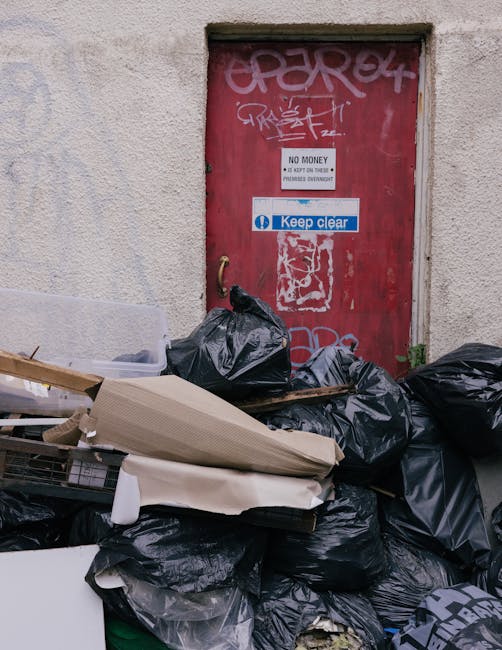
Hidden rubbish removal charges in Haringey: how to avoid extra costs
If you are arranging a clearance in Haringey, the headline price is only part of the story. The real worry is the bit that appears later: access fees, loading charges, stair fees, parking issues, extra labour, or a "small" surcharge that somehow grows by the end of the day. Hidden rubbish removal charges in Haringey avoid extra costs is really about one thing: knowing what should be included before anyone turns up with a van.
That matters whether you are clearing a flat off Green Lanes, tidying a garage after years of build-up, or shifting builder's waste after a noisy weekend job. The job should feel straightforward. It often isn't. The good news? With a few sensible checks, you can spot weak pricing quickly, compare quotes properly, and avoid that awkward moment when the bill is suddenly larger than the pile in the hallway.
This guide breaks down how rubbish removal pricing usually works, which charges are most commonly hidden, what a fair quote should cover, and how to keep the whole process calm, transparent, and cost-effective. Nothing fancy. Just practical advice you can actually use.
Why hidden rubbish removal charges in Haringey matter
A clear price is not just nice to have. It is the difference between a tidy, predictable job and one that starts out useful but ends with a grumble and an unexpected invoice. In a busy borough like Haringey, where parking can be tight and access can be awkward, small assumptions can become expensive very quickly.
Hidden costs usually creep in when the quote is vague. The company may ask for a photo, give you a broad estimate, then add charges later because the waste was heavier than expected, there were more stairs, the van could not park close enough, or the crew had to wait around. To be fair, some of those issues are genuine job variables. The problem is not that extra work costs money. The problem is when nobody explained that upfront.
For householders, landlords, letting agents, builders, and small businesses, those surprises can be more than irritating. They can wreck a budget, delay a move, or create a poor experience at the exact moment you want the job over and done with. That is why cost transparency is central to making the right choice.
Practical summary: the cheapest quote is rarely the best quote if it does not clearly state what is included, what is excluded, and what could trigger extra charges.
If you want a service that feels properly explained from the start, it helps to review pricing and quote information before making a decision. A proper quote should make you feel informed, not confused. Simple as that.
How hidden rubbish removal charges in Haringey avoid extra costs works
Most rubbish removal pricing is built around a handful of moving parts: volume, weight, access, labour, waste type, and timing. The problem is that some providers present these as if they are fixed when they are actually job-dependent. That is where surprises begin.
Here is the usual flow. You describe the waste, send photos if needed, and receive an estimate. If the company asks smart questions, that is a good sign. They may want to know whether the waste is mixed, whether there are heavy items, whether the clearance is upstairs, and whether they can park nearby. All of that affects the work, and fair pricing should reflect it.
What should happen next is an honest explanation. The company should tell you whether the price is fixed, subject to a site check, or likely to change if the description is incomplete. If there are possible extras, they should be explained in plain English. No tiny print trickery. No rushed "don't worry about it" unless they genuinely mean it.
In practice, the most common hidden rubbish removal charges in Haringey include the following:
- Minimum load charges that apply even when the vehicle is only partly filled.
- Heavy item surcharges for items such as rubble, soil, appliances, or dense furniture.
- Stair or carry fees when waste must be taken down multiple floors.
- Parking or congestion-related charges if the crew cannot load easily from outside.
- Waiting time fees when access is delayed.
- Waste-type surcharges for special handling or separate disposal streams.
- Additional labour fees if the job turns out larger than described.
That does not mean every company adds these charges, or that every job should include them. It means you need a quote that explains the rules. If a provider also offers specialist help like house clearance, flat clearance, or garage clearance, the same pricing clarity should apply across all of them.
One more thing. If the provider cannot explain how the quote is calculated, that is usually not a good sign. You do not need a lecture. You need a clear answer. A decent one, ideally before the van arrives and the pressure starts.
Key benefits and practical advantages
Transparent rubbish removal pricing gives you more than cost control. It gives you confidence, which is oddly underrated when you are staring at an overflowing loft or a builders' pile that seems to have multiplied overnight.
The main benefits are straightforward:
- Better budgeting: you know what the job is likely to cost before you commit.
- Fewer disputes: a detailed quote reduces arguments about what was agreed.
- Less stress: you can plan the rest of the day without worrying about hidden add-ons.
- Faster decisions: clear pricing makes comparison easier.
- More suitable service matching: the right provider can recommend the right clearance type.
There is also a practical side that often gets missed. When a company understands your job properly, they usually send the right size team and vehicle. That means fewer delays and less back-and-forth on the day. It sounds obvious, but you'd be surprised how many headaches begin with a vague booking form and a hopeful guess.
For property clearances, this also matters because a well-scoped job can protect delicate surfaces, communal areas, and time-sensitive handovers. If you are dealing with a tight move-out schedule, or a landlord wants the place emptied quickly, predictability is worth real money. Sometimes the cheapest quote is the most expensive mistake. Annoying, but true.
When the waste is more specialised, such as construction debris or business waste, it can also help to look at dedicated services like builders waste clearance or business waste removal. Specialist services are often clearer about what they can safely take and how pricing is structured.
Who this is for and when it makes sense
This topic is for almost anyone booking rubbish removal in Haringey, but some people feel the risk of hidden charges more sharply than others.
You will especially benefit from being careful if you are:
- A homeowner clearing bulky items, old furniture, or mixed household waste.
- A tenant or flat owner with limited access, stairs, or communal entry points.
- A landlord or letting agent needing a fast and tidy turnaround between occupancies.
- A tradesperson or builder dealing with rubble, timber, packaging, and site waste.
- A business owner clearing office furniture, storage rooms, or archived clutter.
- Someone tackling a big life admin job after a bereavement, move, or long-overdue sort-out.
It also makes sense any time the job is difficult to describe. Mixed loads, attic clutter, furniture, old appliances, garden waste, and building debris all have different disposal implications. If the quote is one-size-fits-all, be careful. Really careful.
For example, a customer clearing a loft may assume the price only reflects the load. But if the waste has to be carried down narrow stairs, through a shared hallway, and out to a vehicle parked two streets away, the work is not really the same as a straight driveway load. That's why the best pricing discussions start with the full picture.
If your clearance is part of a broader home reset, services such as home clearance or loft clearance may suit you better than a simple ad-hoc collection.
Step-by-step guidance
Here is the simplest way to avoid extra costs without making the process awkward or overcomplicated.
- List everything to be removed. Be honest about quantity, size, and type. If there is a sofa, say there is a sofa. If there is rubble under the sofa, say that too.
- Take clear photos. Good photos reduce guesswork. Include access points, stairs, hallways, and any tight corners.
- Ask what the quote includes. Labour, loading, disposal, congestion, access, and VAT should all be clear where relevant.
- Ask what could change the price. This is the big one. You want the likely extras named in advance, not discovered later.
- Check whether the quote is fixed. If not, ask exactly how it can change and by how much.
- Confirm the timing. A same-day clearance may be useful, but only if the pricing is still clear.
- Keep the agreement in writing. Even a short email confirmation is better than memory. Memory is slippery. Very slippery.
- Prepare the waste before arrival. Group items together, unlock access, reserve parking if you can, and remove anything you want to keep.
If the clearance is mainly furniture, a dedicated route such as furniture clearance or furniture disposal may give you a cleaner scope and fewer surprises. That can be especially useful if items are awkward, heavy, or mixed with other rubbish.
And yes, it helps to be a little boring here. Boring is good. Boring means measured, written down, and agreed before anyone starts lifting. That is how you avoid the "oh, we thought it was this much" conversation that nobody enjoys.
Expert tips for better results
After enough clearances, a few patterns become obvious. The people who save money are not always the ones who hunt for the lowest headline price. They are usually the ones who ask the right questions early.
Tip 1: Describe the waste by type, not just by room. "Bedroom clutter" sounds simple, but it may include textiles, broken furniture, cardboard, electrical items, and heavy bags. Those are different jobs.
Tip 2: Be honest about access. A lot of pricing tension comes from access issues, not the waste itself. If there are three flights of stairs, say so. If parking is awkward, say so. It is better to sound cautious than to sound surprised later.
Tip 3: Separate keepers from waste in advance. This is especially useful in lofts, garages, and house clearances. If the crew can see what must go, the job usually runs faster and cleaner.
Tip 4: Ask about recycling and sorting. A responsible provider should be able to explain how mixed waste is handled. That is not just about ethics; it can also affect disposal cost and the suitability of the service.
Tip 5: Use the service that matches the job. An office clean-out is not quite the same as a garden tidy, and a builder's waste job is not the same as a sofa collection. Matching the service to the waste type often improves both price and efficiency. If it is office-related, look at office clearance; for outdoor or shed waste, garden clearance may be the better fit.
Tip 6: Ask one extra question before booking. Just one. Something like, "Is there anything that could increase this price on the day?" That one line can save a lot of bother. Small question, big payoff.
Common mistakes to avoid
The most expensive mistakes are often the simplest ones. Nothing dramatic. Just overlooked details that create room for add-ons.
- Booking on price alone: the cheapest estimate may exclude important parts of the job.
- Not checking access: stairs, narrow paths, controlled entry, or awkward parking can all change the cost.
- Forgetting about mixed waste: different waste types can affect handling and disposal.
- Assuming the quote is fixed: always confirm whether it is provisional or guaranteed.
- Failing to remove keep items first: once the load starts moving, confusion is much harder to fix.
- Leaving heavy items unmentioned: old furniture, soil, rubble, and appliances should always be flagged.
- Not asking about parking or waiting time: the day can get expensive in small increments.
A common one, and it happens more than people admit, is assuming "general waste" covers everything. It often does not. Mixed waste is mixed waste. That sounds obvious now, but in the middle of a stressful clear-out, people say yes to whatever sounds easiest. Then the bill arrives and, well, that's that.
If you are clearing a loft or garage, the space can hide things that only become visible once sorting begins. A quick video walk-through or a few well-lit photos can really help avoid a later mismatch between expectations and reality.
Tools, resources and recommendations
You do not need fancy software to avoid hidden rubbish removal charges. A phone, a note app, and a calm checklist are usually enough. Still, a few practical tools can make the process smoother.
- Phone photos or short videos: useful for showing volume, access, and item types.
- Simple room-by-room notes: helpful for larger home clearances where waste is spread around.
- Parking and access notes: keep a quick record of restrictions, permits, or loading options.
- Measurement tape: handy for bulky furniture or awkward doorway clearance.
- Online service pages: useful for understanding which clearance type matches your job.
For broader planning, it can help to review waste removal options alongside any specialist clearance page. That way you can compare general collection versus more tailored services, depending on the job size and waste type.
If sustainability matters to you, look at the provider's approach to sorting and disposal. A good recycling and sustainability page should explain the general principles clearly, without overpromising. You can also review recycling and sustainability information to see how the business thinks about reuse, diversion, and responsible handling.
For service confidence, it is also sensible to read pages about the company's background, insurance and safety, and health and safety policy. Those pages help you judge whether the operation feels organised and credible. That matters more than people sometimes admit.
Law, compliance, standards, and best practice
When rubbish is removed, it is not just a logistics issue. It also touches waste handling, duty of care, safety, and responsible disposal. You do not need to become an expert overnight, but a few practical principles are worth keeping in mind.
Duty of care: in the UK, waste producers and carriers are expected to handle waste responsibly. In plain English, that means you should use a service that can clearly explain how waste is collected, transported, and disposed of. If a provider seems vague about this, tread carefully.
Mixed waste and special items: some items need different handling, especially electrical goods, heavy materials, or potentially hazardous waste. Not every clearance includes every item type, and pretending otherwise causes trouble later.
Safety and access: crews should work safely around stairwells, heavy loads, and shared spaces. If a company has clear safety practices, that is a positive sign rather than a formality.
Best practice for customers: be accurate, be upfront, and keep a written record of what was agreed. A short written confirmation is often enough. Nothing glamorous, but very useful.
If your job involves business premises, it can also be worth checking the fit with business waste removal or office-related services, because workplace waste often needs clearer scheduling and cleaner documentation than a quick domestic pickup.
Some providers publish practical policy pages such as terms and conditions, payment and security, and complaints procedure. Those are worth a look. They can tell you how payment is handled, what happens if something goes wrong, and how the business approaches customer issues. That sort of transparency is not flashy, but it is reassuring.
Options, methods, or comparison table
Choosing the right clearance method is one of the easiest ways to avoid unexpected charges. The wrong service for the job often looks cheap at first and expensive later. Here is a simple comparison.
| Option | Best for | Typical pricing risk | When it helps most |
|---|---|---|---|
| General rubbish removal | Mixed everyday waste, small clear-outs | Medium if the load is described badly | Quick, straightforward household jobs |
| House clearance | Multiple rooms, whole-property clearances | Medium to high if access is not explained | Moves, downsizing, probate, major decluttering |
| Flat clearance | Apartment clearances with stairs or shared access | Medium if stair carry is not agreed | Smaller homes, top-floor flats, controlled entry |
| Builders waste clearance | Rubble, timber, offcuts, packaging | High if heavy materials are not declared | Renovations, refurb jobs, trades work |
| Furniture clearance / disposal | Bulky items, mixed furniture loads | Medium if items are oversized or awkward | Old sofas, beds, wardrobes, office furniture |
| Garage or loft clearance | Stored clutter, mixed household items | Medium if the volume is underestimated | Long-term clear-outs, pre-sale tidying, spring cleans |
In many cases, the method that looks slightly more specific is actually the safer buy. A tailored service gives the provider a better idea of what to expect, which reduces the room for add-ons later. Not always. But often enough.
Case study or real-world example
Here is a realistic example from the kind of job people often face in Haringey.
A tenant in a first-floor flat in the area needs to clear out a sofa, a mattress, several bags of mixed clutter, and a few small appliances before moving out. The first quote they receive sounds attractive, but it is based on a rough estimate from a single photo. The provider does not ask about stairs, parking, or the fact that the sofa is awkwardly wedged in a narrow hallway.
On the day, the crew arrives and discovers the job is more work than expected. Suddenly there is a stair carry charge, a waiting-time element because the parking space is not ready, and a heavier-load adjustment. The final bill is noticeably higher than the original number. Nobody is thrilled.
Now compare that with a better approach. The customer sends photos, explains the stair access, confirms the load type, and asks whether the quote is fixed. The provider scopes the job more carefully and adjusts the price before arrival. The result? No drama, no surprise extras, and a smoother handover. The price may be slightly higher upfront, but it is honest. That is usually the cheaper option in real life.
This is exactly why careful quoting matters for services like flat clearance and larger house clearance jobs. The more moving parts there are, the more valuable clarity becomes.
Practical checklist
Use this checklist before you book anything. It is simple, but it catches most of the expensive mistakes.
- Have I listed every item to be removed?
- Have I shared clear photos or a video of the waste?
- Have I mentioned stairs, lifts, narrow access, or parking limits?
- Do I know whether the quote is fixed or provisional?
- Have I asked what could trigger a higher price on the day?
- Do I understand whether labour, disposal, and loading are included?
- Have I separated keep items from waste?
- Do I know which service type best fits the job?
- Have I kept the quote or agreement in writing?
- Have I checked the company's safety, payment, and policy information?
If you can tick most of those off, you are in a much better position to avoid unpleasant extras. And honestly, that little bit of prep saves more money than people expect.
Conclusion
Hidden rubbish removal charges in Haringey avoid extra costs only when the quote is clear, the access is explained, and the service matches the job properly. That is the real lesson here. Not every extra charge is a scam, but every unexpected charge is a sign that the job was not scoped well enough from the start.
The safest route is usually the simplest one: be accurate, ask direct questions, compare like with like, and keep the agreement in writing. If you do that, you are far more likely to get a clean, fair price and a service that feels calm rather than chaotic. Which, let's face it, is exactly what most people want when the clutter is already doing enough damage on its own.
If you are comparing providers, it is worth reviewing service details, policy pages, and contact options so you can ask the right questions before booking. A few minutes now can save you a lot of money later.
Get a free quote today and see how much you can save.
And if the job is bigger than it first looks, that is fine too. Take it one step at a time. A clear plan has a funny way of making even the messiest room feel manageable again.
Frequently Asked Questions
What are the most common hidden rubbish removal charges?
The most common extras are stair carry fees, heavy-item surcharges, waiting-time charges, parking-related costs, and add-ons for waste that is larger or more difficult than originally described.
How can I avoid surprise fees when booking rubbish removal in Haringey?
Give a full description, share clear photos, mention access issues, and ask whether the quote is fixed. Also ask what could make the final price change on the day.
Is the cheapest rubbish removal quote usually the best value?
Not always. The cheapest quote can become expensive if it leaves out labour, disposal, access, or loading. A transparent quote is usually better value than a vague low number.
Should a rubbish removal company explain parking and access charges upfront?
Yes. If parking is difficult or the waste has to be carried a long way, that should be discussed before booking. It is a normal part of honest pricing.
Do I need to pay extra for stairs or upper-floor flats?
Often, yes, if the job involves extra carrying time or more labour. The key is whether that was explained in advance and built into the quote.
What should a proper rubbish removal quote include?
A proper quote should clearly state what waste is included, whether loading and disposal are covered, and whether any extras might apply for access, weight, or timing.
Can mixed rubbish increase the cost?
Yes. Mixed waste can be harder to sort and dispose of correctly, especially if it includes heavy items, furniture, or materials that need separate handling.
How do I know if a quote is fixed or just an estimate?
Ask directly. A fixed quote should be described as fixed, while an estimate should say so clearly and explain what may change it.
Are furniture clearance jobs priced differently from general rubbish removal?
They can be. Furniture clearance may be more suitable when the load is mainly bulky furniture, because the service can be scoped more accurately. That often reduces confusion and surprises.
What if I only have a few items to remove?
Even small jobs can attract minimum charges, so it is still worth asking what is included. A small load can still involve labour, transport, and disposal costs.
Why do some companies ask for photos before giving a quote?
Photos help the provider judge volume, weight, and access more accurately. That usually leads to a more reliable quote and fewer disputes later.
Is it worth checking a company's policies before booking?
Yes. Pages such as terms, payment and security, insurance and safety, and complaints procedure can tell you a lot about how the business works and how it handles problems if they arise.